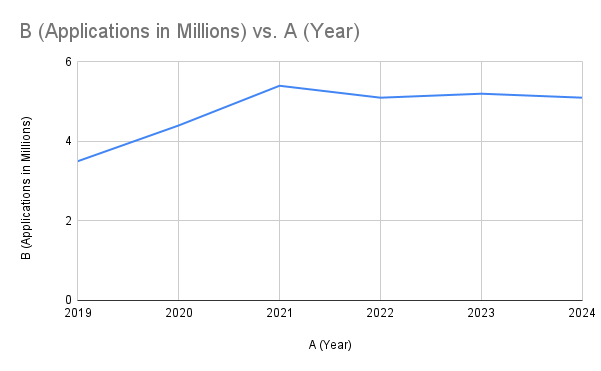
While over five million new businesses are formed each year, the data shows that growth isn’t linear. Peaks often reflect economic shifts rather than long-term stability. The real challenge for new founders isn’t starting — it’s learning how to operate, adapt, and sustain momentum once the initial surge fades.
What matters isn’t just how many businesses begin. It’s what happens after the paperwork is filed, the idea is named, and the initial excitement fades.
For many new founders, the first year isn’t about rapid growth or instant success. It’s about learning how to think differently—how to make decisions with limited information, how to stay consistent when results are slow, and how to keep going when clarity hasn’t arrived yet. In many ways, it feels less like entrepreneurship and more like learning how to work like a writer—slowly, deliberately, and with intention.
The rise in new business formation doesn’t necessarily signal that entrepreneurship has become easier. In fact, it often points to the opposite. Lower barriers to entry mean more people can start—but staying in the work, refining the idea, and building something sustainable requires patience that most people aren’t prepared for.
According to U.S. small business application data, millions of applications are filed each year, but only a fraction turn into long-term, stable operations. That space between starting and sustaining is where most of the real work happens.
This is where expectations matter. Many new entrepreneurs aren’t failing because they lack ambition or intelligence—they’re overwhelmed because the early stages demand skills that aren’t talked about enough: focus, restraint, and the ability to think long-term in a short-term world.
Continue the conversation
This post is part of a short series exploring what happens after the surge of new business starts.
If you’d like to follow future updates, reflections, and behind-the-scenes notes, you can continue reading in the Author Journal.
No hype. Just clarity.